Beyond Obedience
Why knowing commands doesn't always make everyday life easier.
We believe great dog training goes beyond teaching a collection of behaviors in response to verbal cues. Sit. Down. Stay. Come. These are useful communication tools, but knowing what a word means isn't the same as knowing how to navigate life. Dogs need opportunities to observe, investigate, learn, make appropriate choices, solve problems, and adapt to changing circumstances. At Respectful Communications Animal Training LLC, we help dogs and their people develop the skills needed to navigate everyday life together.
We don't just teach dogs what to do when we tell them. We help develop the skills they need to navigate life alongside us.
Your Dog Knows the Commands. But Does Your Dog Know How to Navigate Life?
Teaching an individual behavior in response to a single verbal cue is only one part of a dog's education. Sit when asked. Down when asked. Stay when instructed. Come when called. Walk beside their person. These behaviors are valuable. We are not criticizing obedience training or suggesting that commands are unnecessary.
However, performing a behavior in a familiar training environment does not automatically prepare a dog to respond appropriately in every everyday situation.
Knowing a command and knowing how to use a learned skill in real life are different things.
Why Does My Dog Seem to Forget Everything After Obedience Class?
Some owners report that their dogs performed beautifully in obedience classes but seemed to forget everything when they returned home. Dogs do not automatically generalize learned behaviors from one environment to another. A dog may understand a behavior in a familiar training environment but struggle when faced with different smells, distractions, people, sounds, or expectations.
This does not necessarily mean the dog is stubborn, disobedient, or incapable of learning. Dogs need thoughtful practice, gradual exposure, and opportunities to apply skills in different contexts.
The goal isn't simply to teach a dog to perform a behavior in class. It's to help the dog develop skills that transfer into everyday life.
Born With Abilities. Given Opportunities to Develop Them.
Dogs possess natural behavioral abilities to observe, investigate, learn from experience, make choices, and adapt. Modern domestic life provides many benefits, including safety, shelter, food, medical care, and protection. However, humans also make many everyday decisions for companion dogs.
We determine:
This can reduce opportunities for dogs to practice exploration, problem-solving, and independent decision-making. These abilities have not simply disappeared — they need appropriate opportunities for expression and development. Enrichment, exploration, safe choices, and problem-solving are important parts of a dog's life.
Safety and enrichment should coexist. Comfort should not mean a life without opportunities to think, explore, and make choices.
Real Hands-Free Living Is More Than Walking Without Pulling.
It's developing a dog who can think through life, not simply wait for a cue or correction before moving.
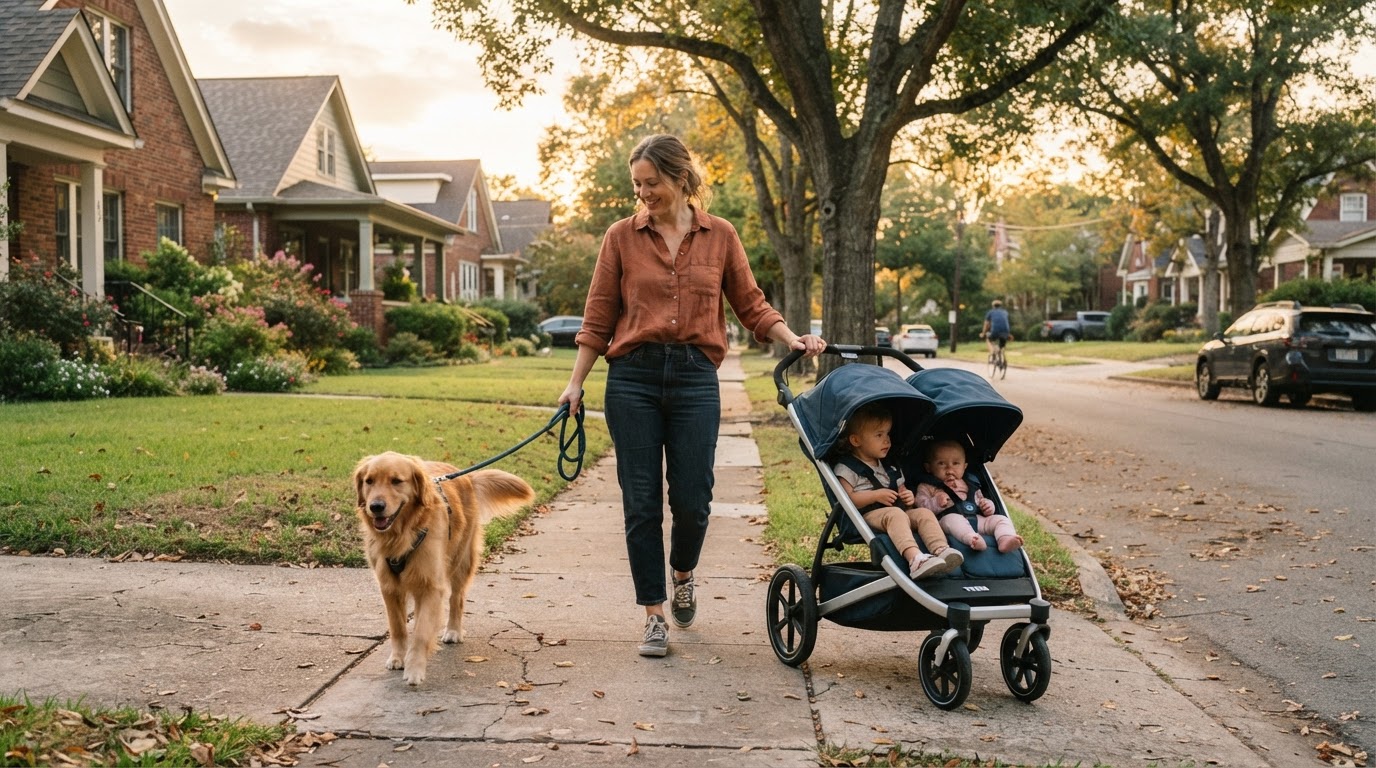
Picture a parent walking a dog while pushing a stroller and caring for a young child. The parent cannot continuously provide verbal instructions for every situation. The family needs a dog who has developed practical skills to:
The same thinking applies to welcoming visitors, navigating neighborhood walks, encountering unfamiliar people and dogs, living with children, managing household routines, and adjusting to unexpected changes. Hands-free living does not mean off-leash freedom, lack of supervision, or the absence of safety boundaries. It means reducing the need for constant micromanagement through thoughtful skill development.
A dog should not need a separate verbal instruction for every moment of everyday life.
Leadership Isn't About Controlling Every Move.
Dogs benefit from structure, predictable boundaries, guidance, and clear communication. However, effective guidance does not require intimidation, domination, or controlling every decision. Not every hesitation or moment of environmental interest is disobedience.
A frightened dog
Needs understanding and appropriate space, not simply an instruction to remain in position.
A dog investigating a scent
Is engaging in natural exploratory behavior.
A dog who hesitates
In an unfamiliar environment may need time and support.
A dog encountering another dog
Needs thoughtful management based on comfort, safety, and context.
We want dogs who remain responsive to their people while retaining the ability to communicate, assess their surroundings, and make appropriate choices.
We Don't Just Teach Behaviors. We Develop Life Skills.
Verbal cues remain useful tools, but they are not the entire objective.
Observation
Recognizing and processing information in the environment.
Problem-Solving
Learning through experience and appropriate exploration.
Choice-Making
Developing the ability to make appropriate choices within safe boundaries.
Adaptability
Responding to changing circumstances.
Confidence
Developing the ability to navigate unfamiliar experiences.
Communication
Building cooperation and understanding between dog and person.
Generalization
Applying learned skills in different environments.
A Different Way to Understand and Develop Your Dog.
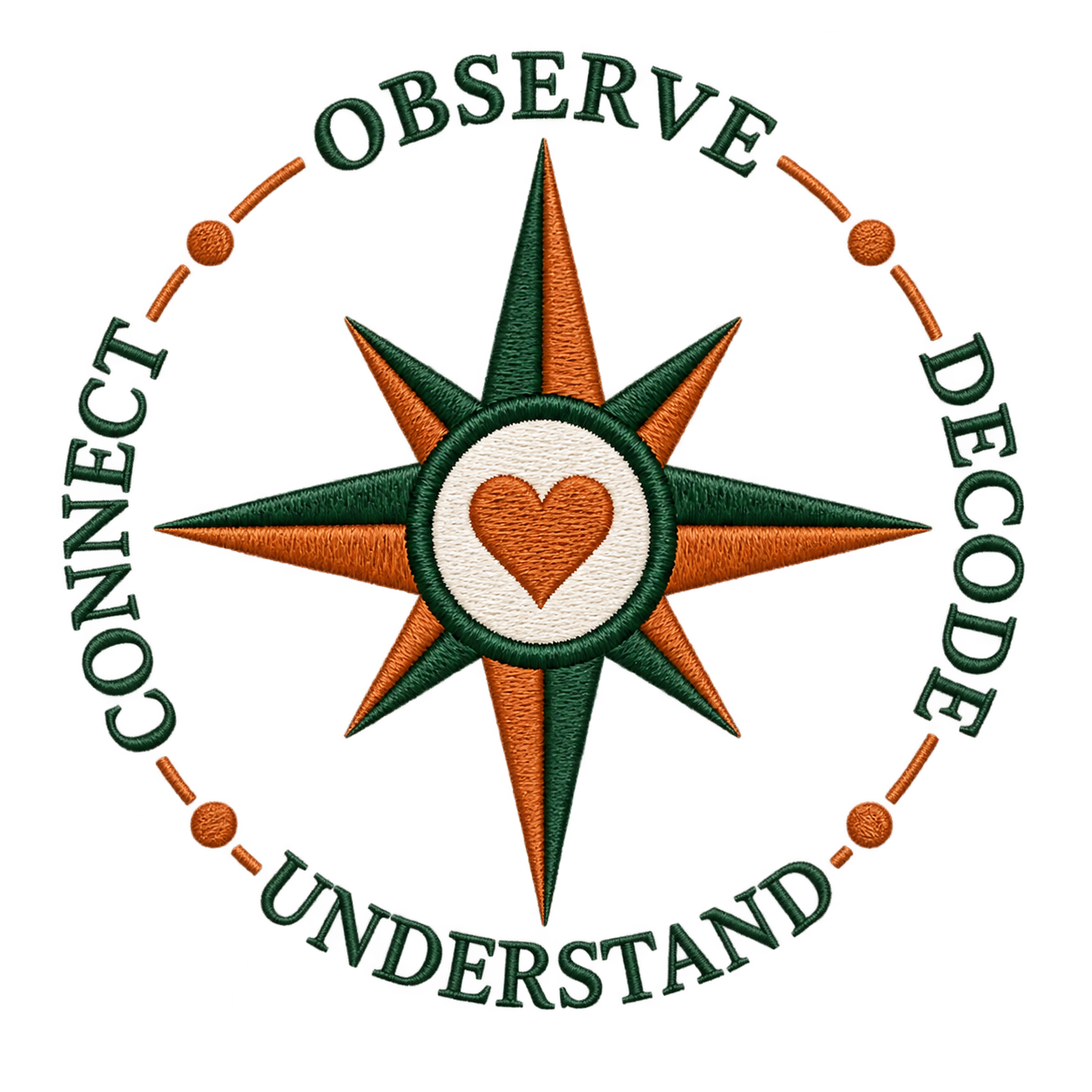
Observe. Decode. Understand. Connect. Four interconnected, heart-centered compass points — the foundation of The Decoder Method™.
Observe
Notice what your dog is communicating and experiencing.
Decode
Explore the information and circumstances influencing behavior.
Understand
Recognize the dog's individual needs and learning requirements.
Connect
Develop communication, trust, and cooperation.
Let's Help Your Dog Navigate Life With You.
Whether you're welcoming a puppy into your home or looking to make everyday life with your dog easier, we can help you identify the skills that will make the greatest difference. Linda Ross takes an individualized, compassionate, science-informed approach to helping dogs and their people develop practical skills for everyday life.